
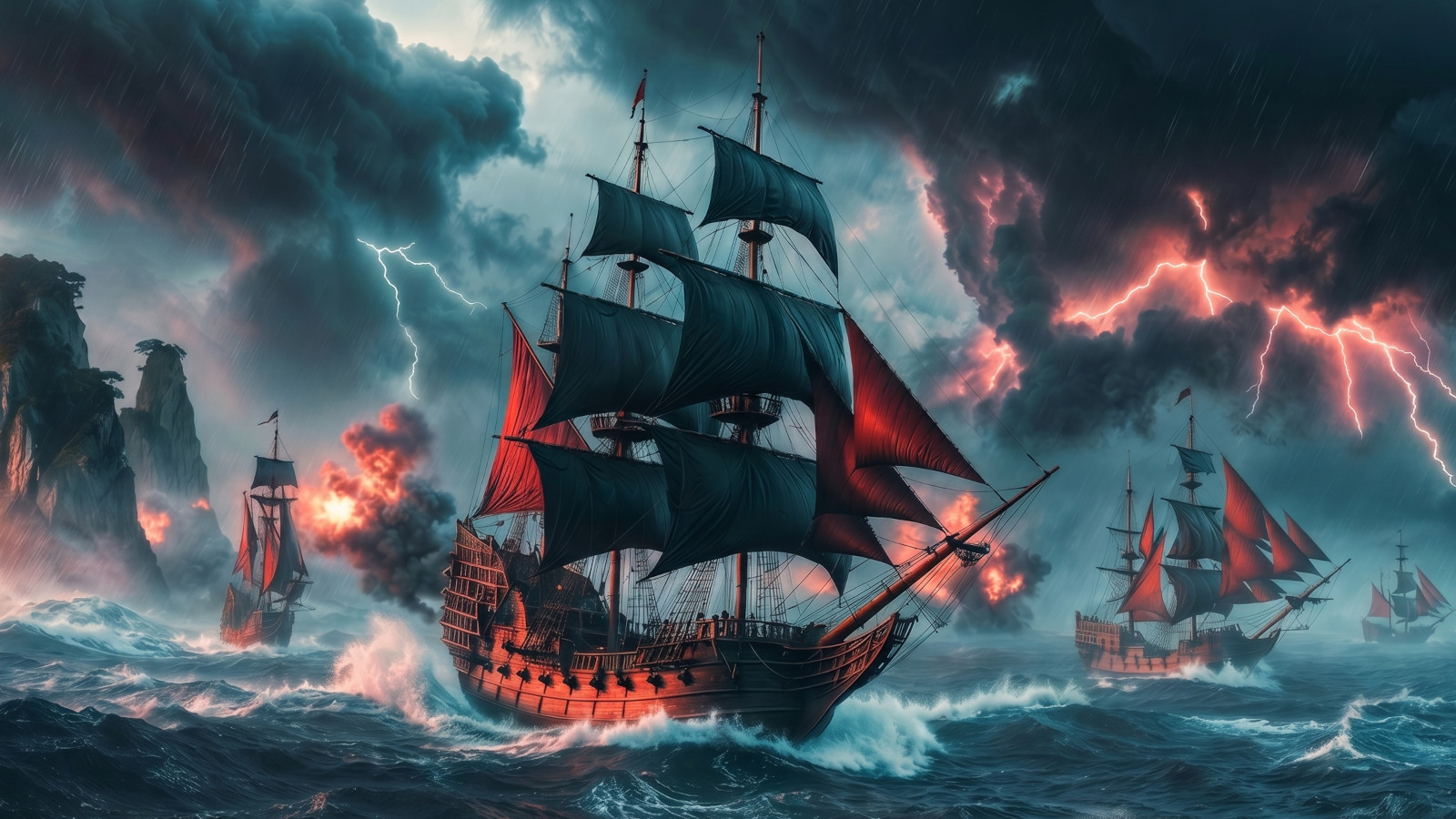
Sea of Conquest did something worth respecting: it proved that an enormous number of people want pirate ships and long term progression in the same product. That is not a small finding, and any studio building a naval game should take it seriously.
SeaGods takes it seriously and then disagrees about the most important part. This post is about exactly where, and why.
The thing they got right
Progression that pays off over weeks. A fleet that becomes recognisably yours. Systems with enough depth that there is always a next thing to work toward, and a session length short enough to fit into a commute.
We are not building against any of that. SeaGods has ship progression, upgrade tracks, an economy, alliances, and long term goals, and it is meant to reward the player who keeps showing up. If that loop is what you like, you will find it here.
The thing we disagree with
In a lot of mobile strategy games, including this corner of the genre, the combat is something that happens to you rather than something you do. You assemble the fleet, you press the button, and you watch the numbers resolve. Your skill expressed itself an hour ago in a menu.
That is a legitimate design. It is also the reason a large number of players eventually drift away and start searching for something else, and it is the single biggest thing SeaGods does differently.
In SeaGods you steer. You position, you close, you fire, you break off and repair, you decide whether that sail on the horizon is worth the ammunition. The upgrades matter because they change what you can attempt, not because they change a number that a simulation resolves without you.
Timers, energy, and the price of your attention
The second disagreement is about how free to play games treat time.
Energy meters, build timers, and countdowns you can pay to skip all share one purpose: to make waiting uncomfortable enough that you spend money to stop waiting. It works. It is also a design that treats a player's evening as leverage.
SeaGods does not have energy. If you have an hour, you can play for an hour. If you have fifteen minutes, you can do fifteen minutes of useful sailing. Nothing charges you to be allowed to continue.
That is not charity, it is a different bet: that a game people enjoy playing for long stretches is healthier than a game engineered to be mildly frustrating on a schedule.
A browser tab instead of an app store
Sea of Conquest is a mobile game and lives inside app store economics. SeaGods runs in a browser, which changes several things at once.
- No install. A link, and you are in the water.
- No store gatekeeper deciding whether a small studio gets to exist.
- Works on the machine you already have, at work, at home, on a laptop that is not new.
- No app update standing between you and a fix we shipped this morning.
Direct comparison
Combat
Sea of Conquest: fleet composition and resolution. SeaGods: you drive the ship and aim the guns, live, against creatures, hostile vessels, and other players.
Progression
Both are deep. The difference is what depth buys. In SeaGods a better hull or a heavier cannon changes the fights you can survive, and you find out by sailing into one.
Other players
Both have them. SeaGods puts them in the same water as you in real time rather than mostly on a leaderboard.
Monetisation
No energy, no pay to skip timers. We will be specific about the model before the alpha opens rather than leaving it vague and hoping nobody asks.
Platform
Mobile app versus browser tab.
Where Sea of Conquest still wins
It is finished, it is live, it has years of content, and it has a budget we do not have. If you want a large polished pirate strategy game to play tonight, that is a real answer and this post is not going to pretend otherwise.
SeaGods is in development. The first test will be a narrow slice of the world with a limited level range, because a small game that works beats a large one that does not. We would rather tell you that now than oversell it and disappoint you in month two.
The monetisation question, answered early
Any comparison with a mobile strategy game runs into this immediately, so we will not dodge it.
SeaGods will have a way to spend money. A studio that pretends otherwise is either lying or about to disappear. What matters is which shape it takes, and there are two broad options in this genre.
The first sells relief from friction the game deliberately created. Energy that runs out, timers that block progress, queues that only move with currency. It works commercially and it makes the game worse in exactly the moments a player is most engaged.
The second sells things that do not damage the experience of not buying them. That is the direction we are taking, and we will publish the specifics in plain language before the alpha opens rather than after people are invested.
Two commitments now: no energy meters, and no paid skips for timers, because there will not be timers to skip.
Questions we expect
Is SeaGods a mobile game?
It runs in a browser and the client is responsive, but the alpha targets desktop first. If you want a phone game to check between other things, Sea of Conquest is genuinely the better answer today.
Do I control the ship directly?
Yes. That is the central difference and the reason the project exists in this shape.
Is there PvP?
Yes, with protections for new captains so that arriving in the world is not the same as being a target.
Are there alliances?
Built, with ranks, roles, diplomacy and a treasury. Not open in the first alpha phase, because it has not been tested with enough real people yet.
When can I play it?
An alpha is coming and the date will be announced here first.
Who SeaGods is for
If you liked the pirate setting and the progression but got tired of watching your fleet fight without you, this is aimed squarely at you. If you liked the timers, we are genuinely the wrong game.
Alpha details are coming shortly.