If you grew up playing PC games between 2006 and 2013, you remember a specific kind of tension that almost vanished from modern game design. You were sitting in a browser tab on a Friday evening, piloting a mid-tier ship across a contested map in Seafight, DarkOrbit, or Pirate Storm. Your hull was half-repaired, your cargo hold was full, and a red dot had just appeared on the edge of your minimap.
There was no matchmaking queue. There was no cut-scene. There was no balanced five-versus-five arena referee making sure the fight was fair. You either knew the map borders, managed your shields and ammunition, and made it to the portal or safe harbor, or you popped and had to repair back at base.
Modern big-budget games spent the last decade sanding every sharp edge off multiplayer worlds until they felt like theme-park rides. Looking back at the golden era of browser MMOs shows exactly what was lost in the process, and why those classic design rules are the backbone of SeaGods.
1. Maps as neighborhoods, not matchmaking lobbies
In most modern online games, you press a big "Play" button and get dropped into a temporary instance with strangers you will never see again. Fifteen minutes later, the match ends and the lobby dissolves.
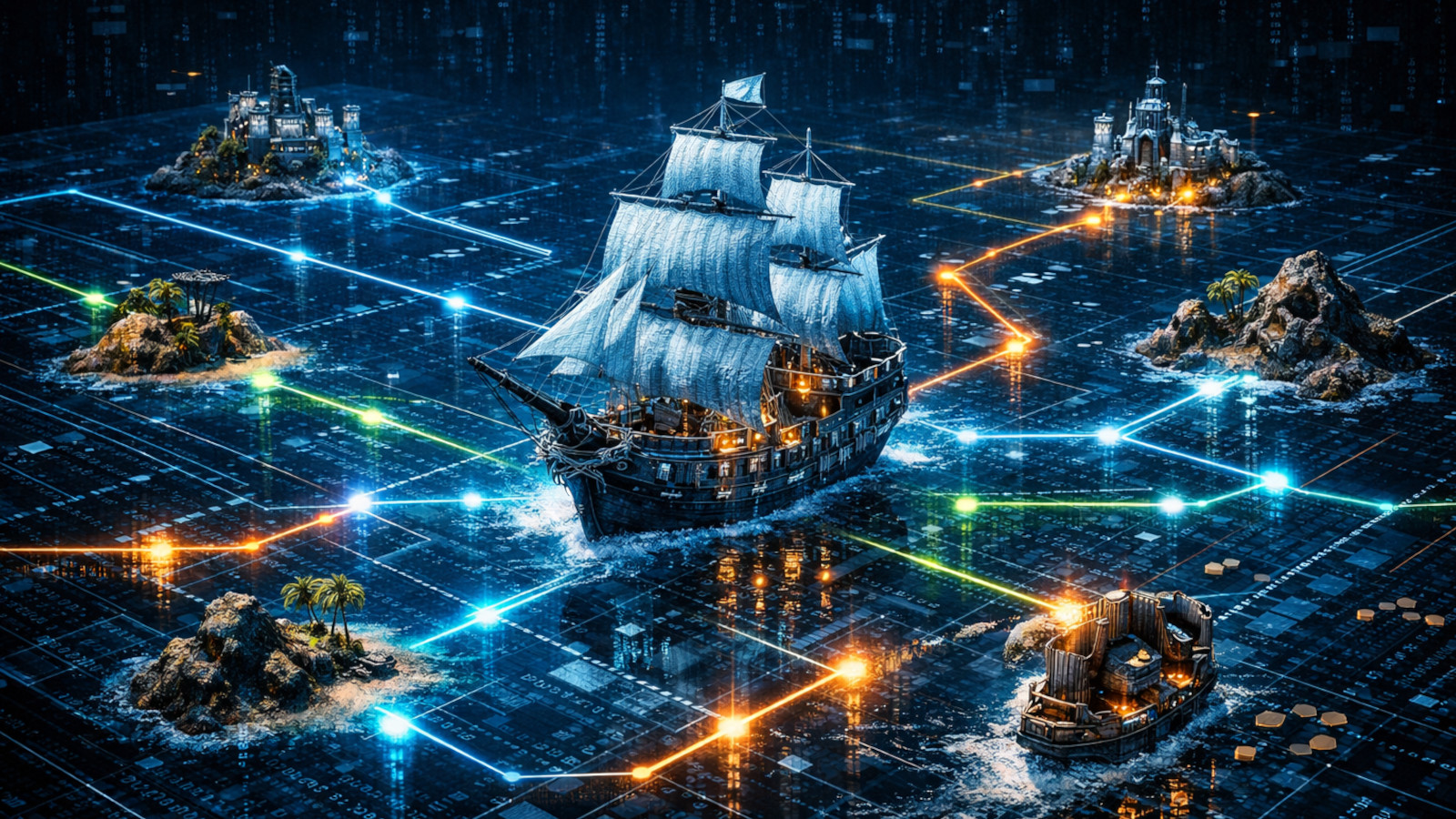
In classic browser MMOs, the world was a persistent grid of numbered maps (Sea 1 through Sea 9, or Sector 1-1 through 4-4). Safe maps sat near home port; dangerous, high-reward maps sat further out. Because you sailed through the same maps every evening on the same server, you recognized the names on the water. You knew which alliance held the center map at night, which solo hunter camped the border crossings, and who would help you clear a boss if you asked in chat. A grid of persistent maps turns a player base into a neighborhood.
2. Top-down clarity beats over-the-shoulder confusion
There is a reason Seafight, DarkOrbit, and Pirate Storm all used top-down or angled isometric cameras. In an open map where danger can come from all 360 degrees, a tight over-the-shoulder camera hides half the battlefield behind your own sails.
A top-down perspective gives you total spatial awareness: you see your firing arc, the exact distance to the nearest island or map border, the health bar of the monster you are kiting, and the silhouette of an approaching warship at the edge of your vision. It turns naval combat into high-speed positioning chess.
3. Long-term ship identity
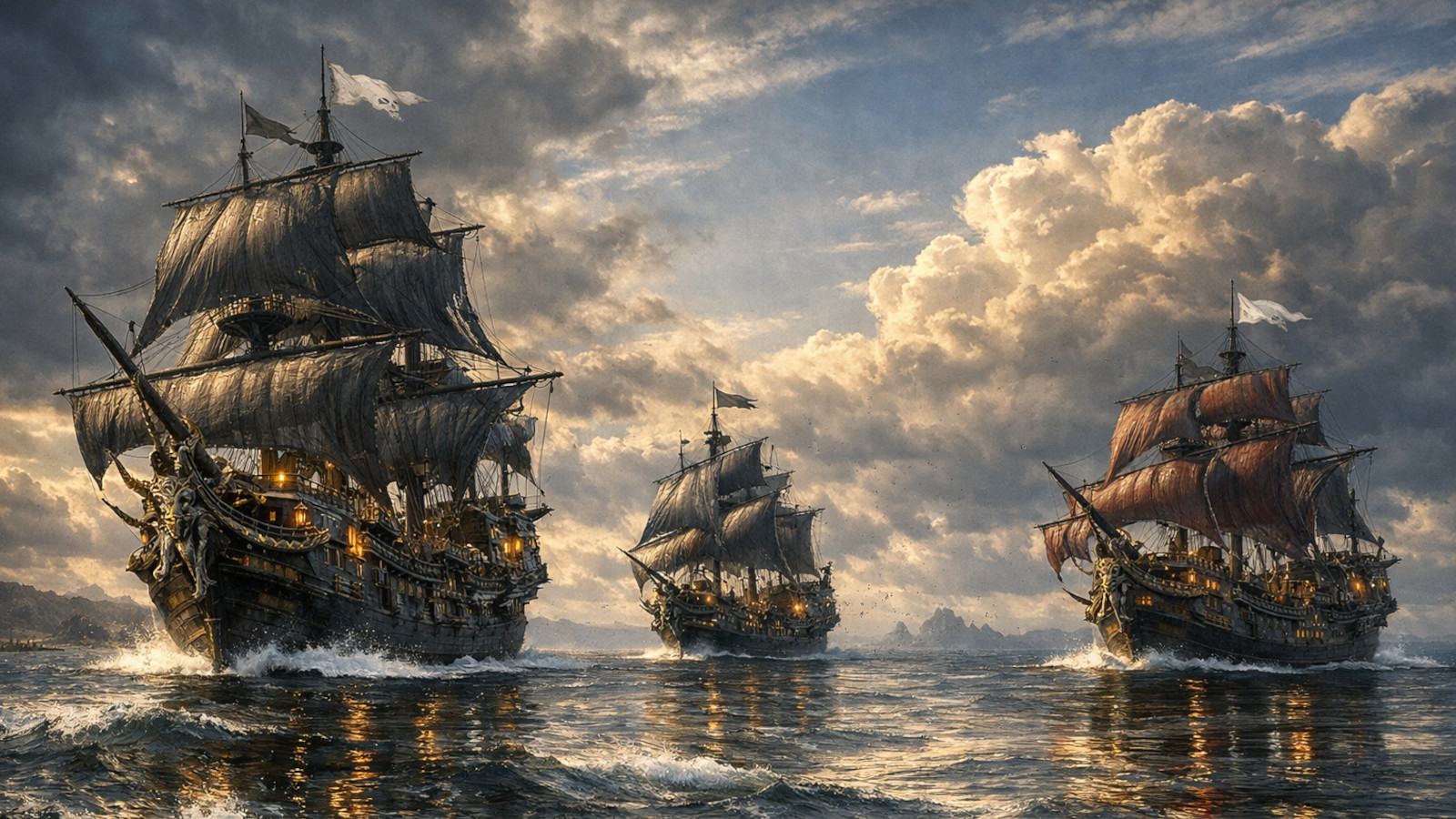
When you earned a top-tier hull in a classic browser MMO, everyone on the map could see it the moment you entered their screen. Progression was not hidden inside a microscopic gear-score number on an inspection menu; it was visible in the size of your vessel, the weight of your broadside, and the color of the ammunition flying across the water.
In SeaGods, we keep that exact visual honesty: ships, cannon loadouts, harpoons, and shields are readable on the water, while keeping the economy clean and server-authoritative.
4. Where the classic era went wrong (and how to fix it)
Honesty requires admitting why many players eventually burned out on late-era 2010s browser MMOs. After ten years of updates, publishers piled so many overlapping upgrade currencies, lottery chests, and power-creep layers onto the old games that skill and positioning stopped being able to overcome wallet size. Worse, when mobile gaming exploded, many studios replaced active steering with auto-play timers.
The fix is not abandoning the browser MMO blueprint. The fix is keeping the 2008 map tension and throwing out the 2018 bloat:
- Keep the persistent grid of nine seas where crossing into deeper water is a real choice.
- Keep active top-down steering, broadsides, harpoons, shields, and out-of-combat repairs.
- Keep alliances, diplomacy, and contested waters that give veteran captains a reason to organize.
- Cut out the auto-play timers, energy bars, and client-side cheats by building on a clean, server-authoritative modern stack.
If you want to revisit the full historical timeline of those classics, read our deep dives into the history of Seafight, the history of Pirate Storm, and the 2026 spiritual successor scene. Then head over to the SeaGods page to see how we are building the next chapter.