Here is the dirty secret of naval game design: if you take a standard top-down action RPG, replace the wizard with a wooden ship, and replace the fireball with a cannonball, the combat feels terrible.
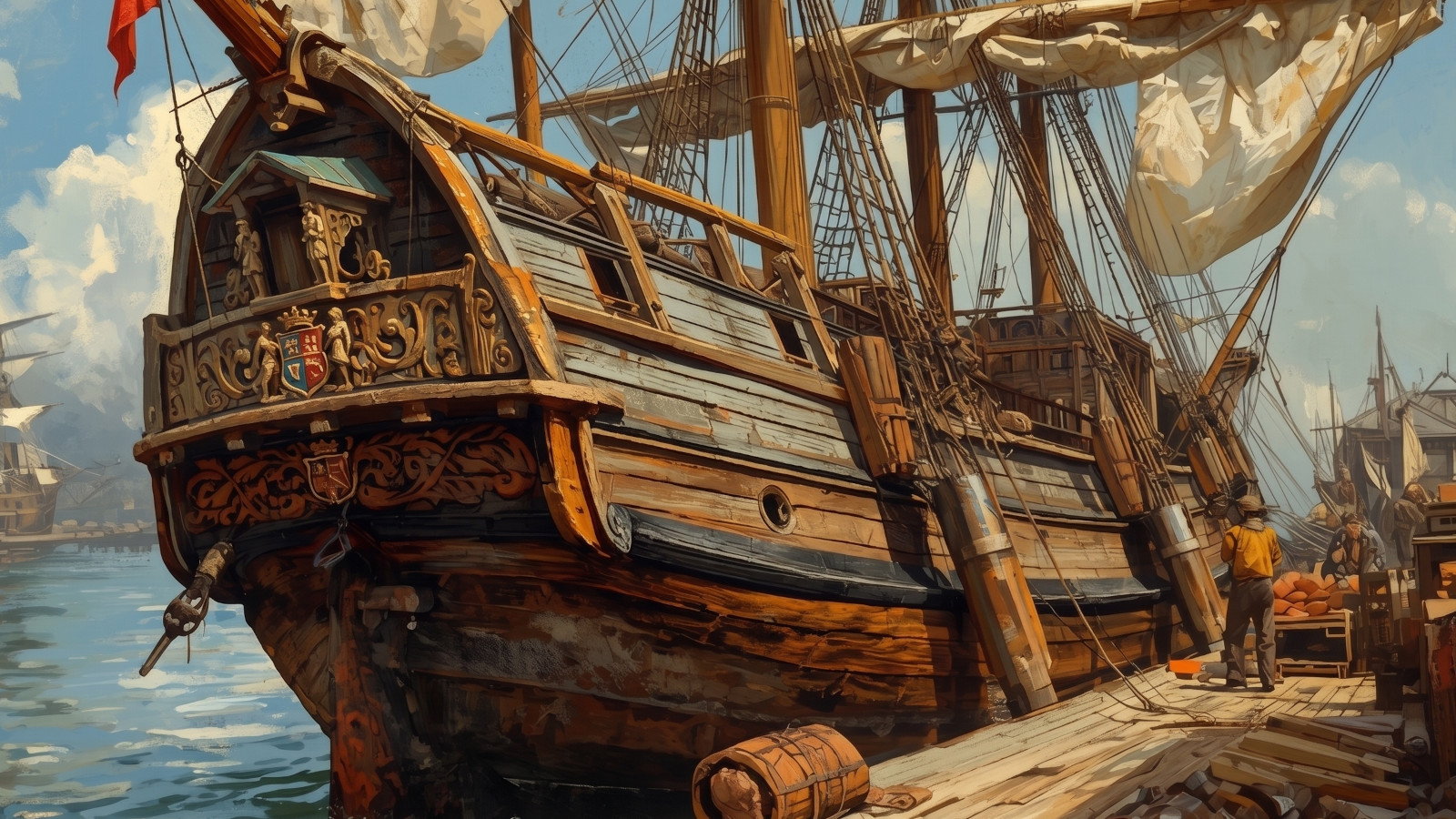
Why? Because a person on foot can stop on a dime, spin 180 degrees in a single frame, and fire three times a second. A wooden warship carrying forty iron cannons is a floating pendulum of oak and canvas. If it turns like a sports car and fires like a submachine gun, your brain immediately stops believing it is a ship. It just reads as a brown triangle sliding across blue wallpaper.
Across SeaWar Sandbox V1 and our browser naval MMO SeaGods, we have spent over a year obsessing over one question: how do you make top-down naval combat feel heavy, readable, and responsive at the same time?
1. The volley is a commitment, not a click stream
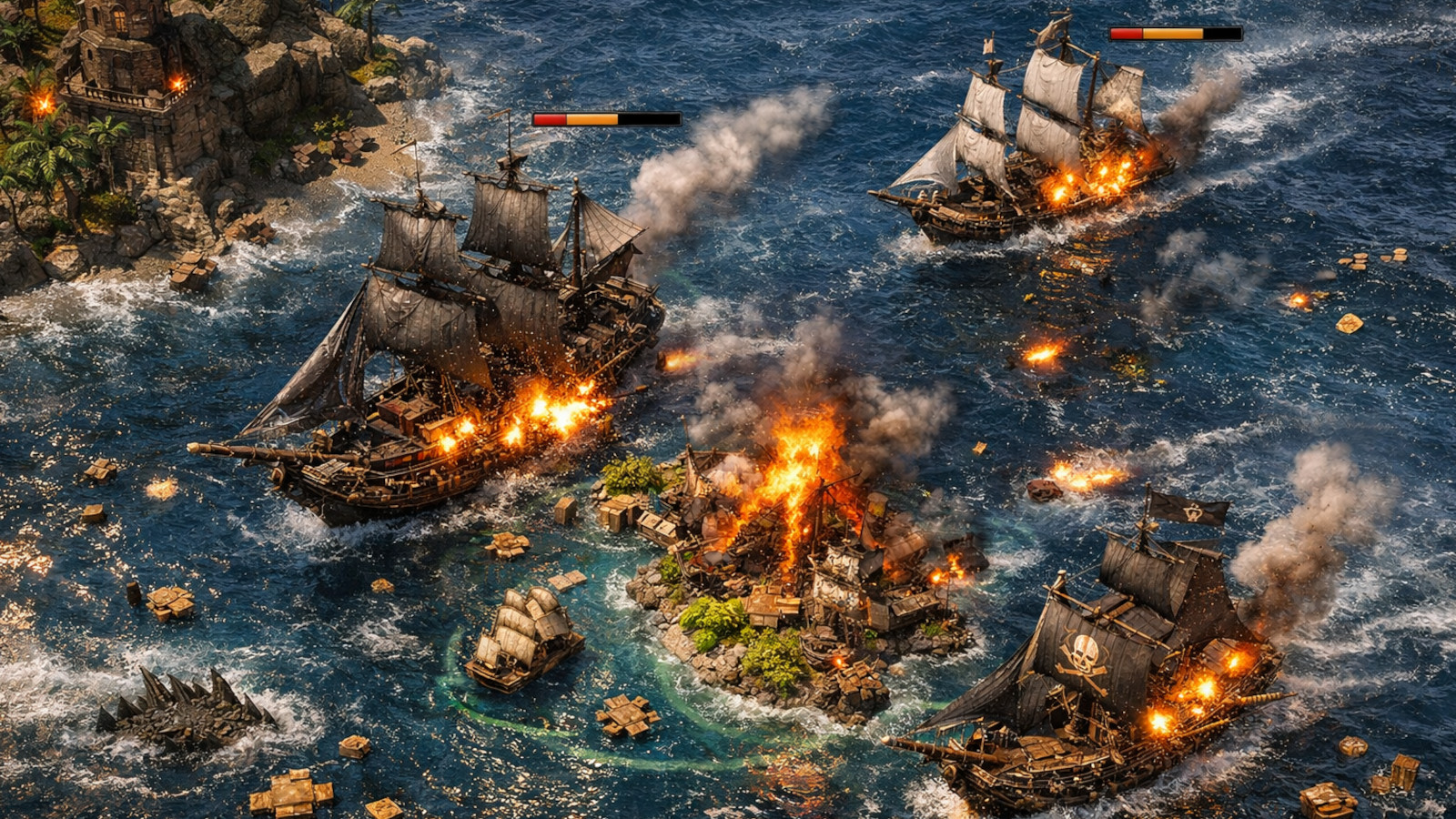
In a twitch shooter, missing one bullet out of thirty does not matter. In a naval battle, firing a full broadside of eighty cannons is an event. Smoke rolls across the water, iron arcs toward the target, and for the next few seconds your gun crews are swabbing barrels and ramming charges.
That reload window is where all the real tactics live. While your cannons are cycling, you are not pressing a fire button. You are watching the range ring, reading whether the enemy captain is trying to pinch you against an island or pull you into a boss spawn, and deciding whether to hold your distance or close for a finishing salvo. When every broadside has weight, every cooldown becomes a positioning puzzle.
2. Why ammunition choice beats complicated skill bars
Many modern MMOs bolt eight or ten cooldown skills onto a hotbar until a naval fight feels like playing a piano. Classic browser naval games proved twenty years ago that you do not need a twelve-button rotation when ammunition itself is the tactical choice.
Consider how simple and expressive a clean ammo system is:
- Standard / Stone shot: Free or dirt-cheap, unlimited, reliable for clearing low-tier creatures in safe waters without burning your treasury.
- Mid-tier / Hollow shot: The workhorse ammunition for daily patrols, mid-tier hunting, and sustained skirmishes where cost-per-damage matters.
- High-impact / Explosive and specialized shot: Reserved for boss hunts, alliance wars, and moments where ending the fight three volleys faster is the difference between taking the prize and sinking.
When switching ammunition changes your damage multiplier and your economic burn rate on the fly, every encounter asks a genuine question: is this target worth good powder?
3. Separating cannons from harpoons
One of the biggest upgrades from SeaWar to SeaGods is splitting offensive loadouts between cannons (for warships and structures) and harpoons (for sea creatures and monsters).
In history and folklore, you do not hunt a leviathan the same way you duel a frigate. Giving harpoons their own slot, upgrade track, and ammunition means a captain can outfit their vessel specifically for monster hunting in the outer seas, or balance their deck so they are not helpless if a hostile player interrupts the hunt halfway through.
4. The out-of-combat repair rule
Nothing ruins naval combat faster than instant mid-battle healing potions. If a captain can press a button and magically restore half their hull while taking broadsides from two enemies, positioning stops mattering and fights turn into pure wallet or stat checks.
Both SeaWar and SeaGods enforce a strict, readable rule: repairs happen over time when you are out of combat, and taking damage or maneuvering breaks the repair.
That single rule creates three distinct phases in every fight:
- The approach: Choosing your angle and distance before the first shot lands.
- The exchange: Trading volleys while managing shields, range rings, and ammo tiers.
- The disengagement: Breaking contact cleanly when your hull drops low, finding quiet water, and watching the horizon while your Engineers bring your planks back together.
5. Visual clarity in a browser tab
When a game runs in a browser tab alongside your Discord window, visual clutter is fatal. If five ships and two sea monsters are fighting in the same grid square, you must be able to read three things at a glance: where your hull is pointing, whether your target is inside your firing ring, and how much armor you have left.
That is why we favor crisp top-down camera angles, unmistakable range rings that shift color the instant you enter effective cannon distance, and clean damage feedback over screen-shaking particle soup. Heavy combat is not about blinding the player with smoke. It is about making every turn of the wheel and every broadside count.
Want to feel the single-player version of that loop tonight? Grab SeaWar Sandbox V1 for free on our download page, or read how we are bringing it to a shared multiplayer ocean on the SeaGods page.