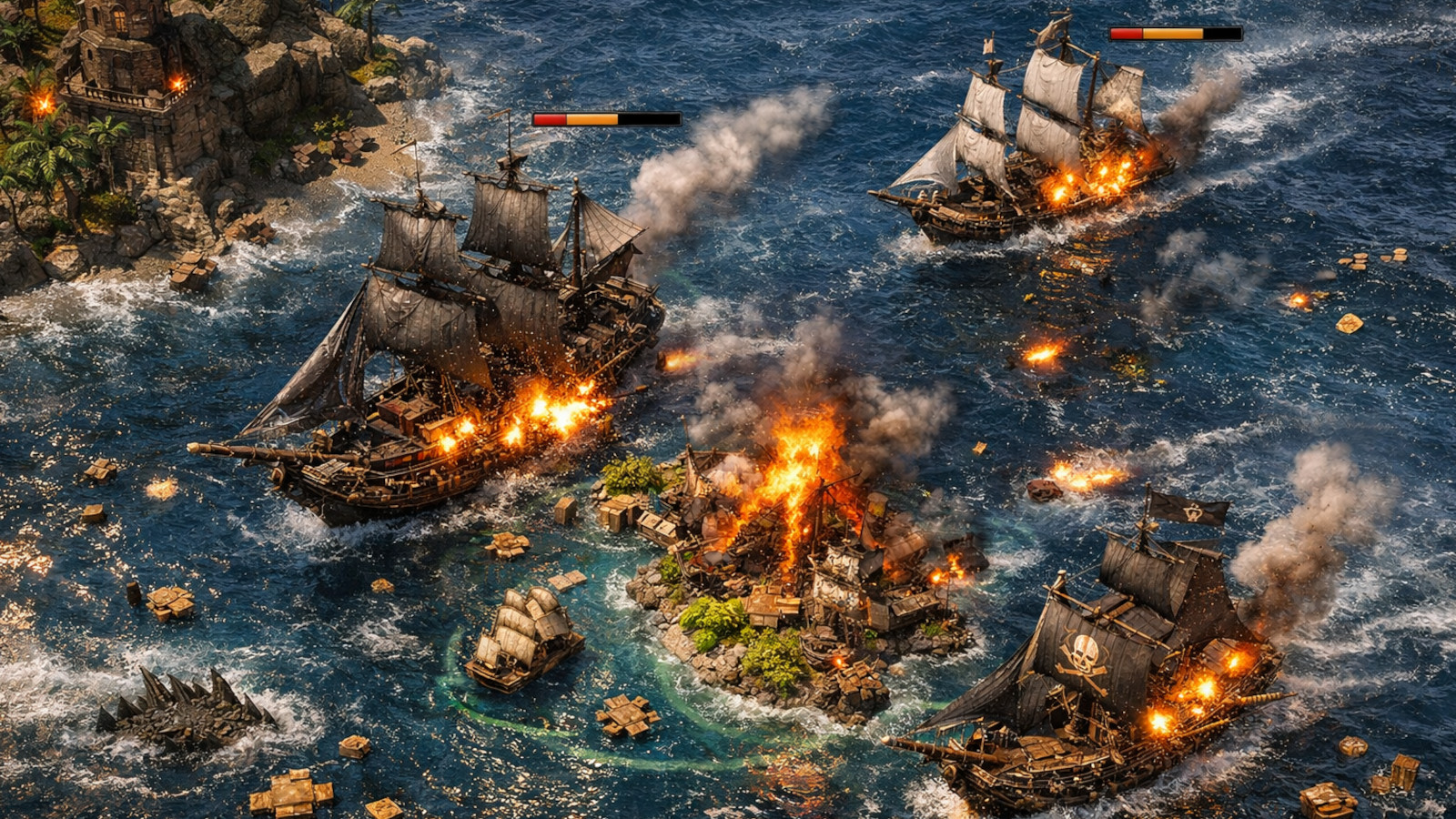
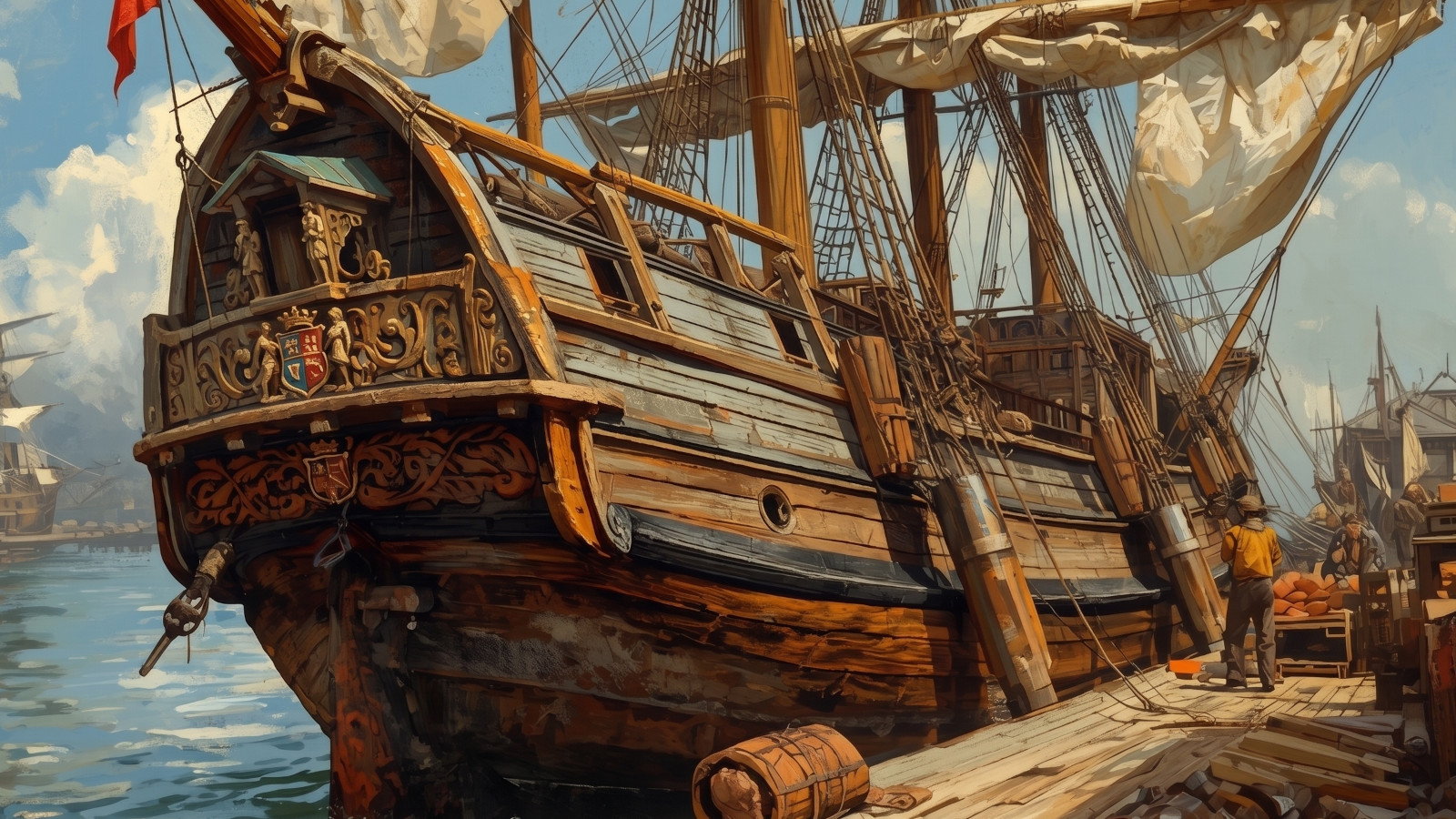
Spend ten minutes in any naval game and you will meet the same vocabulary: sloop, cutter, corvette, frigate, galleon, ship of the line. Most games treat those words as simple level numbers, where a frigate is just a corvette with bigger health bars. In the real Age of Sail, those hulls existed for completely different jobs, and a captain who used one for the wrong job usually ended the afternoon in a lifeboat.
Understanding why historic warships were shaped the way they were makes every naval game more interesting to play, and it is the foundation for how we design ship progression at Phalangix.
The core problem of wooden warships
A wooden sailing ship is a floating compromise between three things that hate each other: hull strength, gun weight, and sail area.
Iron cannons are brutally heavy. A single 32-pounder cannon barrel in the late eighteenth century weighed nearly three tons before you counted its wooden carriage, iron shot, and gunpowder. Put eighty of those on a hull and you need thick oak frames just to keep the deck from sagging. Thick oak frames make the ship heavy and deep in the water. A heavy, deep hull needs huge masts and acres of canvas to move, and it cannot sail into shallow coastal coves without running aground.
Because no single ship could be fast, shallow-draft, cheap, and heavily armed all at once, navies split their fleets into distinct hull classes.
1. Sloops, cutters, and gunboats: the shallow-water hunters
At the bottom of the tonnage chart sat single-masted cutters and two-masted sloops-of-war. They carried light guns on a single open deck and drew very little water.
Why did pirates and privateers love them? Because a massive naval warship could not follow a sloop over a sandbar. A sloop could dart out of a shallow inlet, take a slow merchant prize, and vanish back into coastal channels before a heavy patrol vessel could even tack into the wind. In game terms, small hulls are about initiative and escape: choosing which fights happen at all.
2. Corvettes: the fast scouts and commerce raiders
Step up to a flush-decked three-masted vessel with around twenty guns and you have the historic corvette (or sloop-of-war in Royal Navy terminology). Corvettes carried all their cannons on a single gun deck, keeping their center of gravity low and their hull lines sleek.
In both SeaWar Sandbox V1 and our upcoming browser MMO SeaGods, the corvette tier marks the exact moment a player stops feeling like a survivor on a boat and starts feeling like a warship captain. You finally have enough broadside weight to punish mistakes, without losing the turn rate needed to dodge heavy boss telegraphs.
3. Frigates: the eyes of the fleet
If the Age of Sail has a hero ship, it is the frigate. Carrying between twenty-eight and forty-four guns on a single enclosed gun deck plus lighter guns on the quarterdeck and forecastle, the frigate was built for long-range cruising, scouting, and hunting commerce.
Here is the historical rule that surprises most players: frigates did not fight in the main line of battle. In a fleet engagement between massive ships of the line, an unwritten gentleman's code held that a three-decker would not fire on an enemy frigate unless the frigate fired first. A single broadside from a first-rate ship of the line could shatter a frigate's lighter framing in seconds. Instead, frigates prowled the edges of the map, relaying signals, towing damaged ships, and dueling rival frigates in single-ship combat.
4. Galleons: the armed treasure fortresses
Before the specialized line-of-battle warship matured, the Spanish and Portuguese empires relied on the galleon: high-sterned, multi-decked vessels designed to haul bullion and spice across oceans while fighting off privateers. With towering forecastles and sterncastles, a galleon was a floating fortress designed to resist boarding just as much as cannon fire.
In SeaWar Sandbox V1, the Galleon sits at the top of the six-ship ladder with 100,000 HP and eighty cannons, built specifically to trade blows with the Kraken, Moby Dick, and the Demon Lord.
5. Ships of the line: floating artillery batteries
At the peak of the wooden world stood the ships of the line: two-decked 74-gun workhorses and towering three-decked first-rates carrying 100 to 120 cannons. Their job was not chasing smugglers. Their job was sailing in a nose-to-tail column and hammering an enemy fleet or coastal fortress into splinters.
At close range, a first-rate fired over a ton of iron in a single broadside. They were slow to turn, expensive to crew (requiring 800 to 900 sailors), and vulnerable if isolated and raked from astern by nimbler enemies.
How historic classes make naval games better
When a game treats ships as pure linear stat sticks, every player in the ocean eventually sails the exact same endgame hull. That works fine in a compact single-player campaign like SeaWar, where climbing from The Door to the Galleon is the spine of your thirty-hour revenge story.
In a shared multiplayer ocean like SeaGods, however, ship variety is much more interesting when hulls have real character:
- Speed versus broadside weight: A lighter hull that controls the distance can dictate when a fight starts and when it ends.
- Ammunition synergy: Heavy cannons paired with explosive or specialized shot reward clean positioning rather than button mashing.
- Port logistics and repair windows: Bigger hulls carry deeper armor pools, but repairing them out of combat takes time and planning.
Whether you prefer solo monster hunting in SeaWar or shared-water fleet battles in SeaGods, the timeless tension of wooden warships remains the same: the wind, the angle, and the hull underneath your boots decide who sails back to port.